







I received this book for free from in exchange for an honest review. This does not affect my opinion of the book or the content of my review.
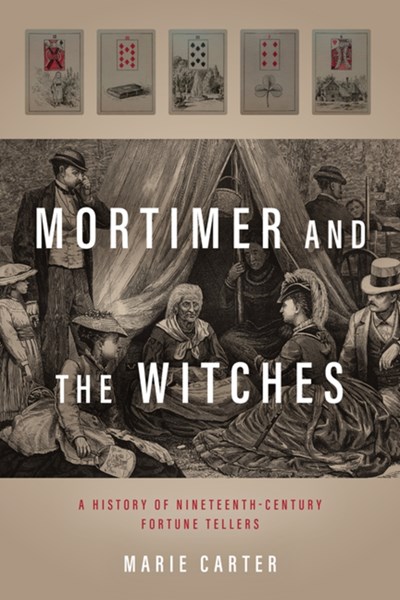
Mortimer and the Witches: A History of Nineteenth-Century Fortune Tellers by Marie Carter
Published by Empire State Editions on July 7, 2026
Genres: Women's Studies
Pages: 208
Buy on Amazon
The neglected histories of 19th-century NYC’s maligned working-class fortune tellers and the man who set out to discredit them
Under the pseudonym Q. K. Philander Doesticks, P. B., humor writer Mortimer Thomson went undercover to investigate and report on the fortune tellers of New York City’s tenements and slums. When his articles were published in book form in 1858, they catalyzed a series of arrests that both scandalized and delighted the public. But Mortimer was guarding some secrets of his own, and in many ways, his own life paralleled the lives of the women he both visited and vilified. In Mortimer and the Witches, author Marie Carter examines the lives of these marginalized fortune tellers while also detailing Mortimer Thomson’s peculiar and complicated biography.
Living primarily in the poor section of the Lower East Side, nineteenth-century fortune tellers offered their clients answers to all questions in astrology, love, and law matters. They promised to cure ailments. They spoke of loved ones from beyond the grave. Yet Doesticks saw them as the worst of the worst evil-doers. His investigative reporting aimed to stop unsuspecting young women from seeking the corrupt soothsaying advice of these so-called clairvoyants and to expose the absurd and woefully inaccurate predictions of these “witches.”
Marie Carter views these stories of working-class, immigrant women with more depth than Doesticks’s mocking articles would allow. In her analysis and discussion, she presents them as three-dimensional figures rather than the caricatures Doesticks made them out to be. What other professions at that time allowed women the kind of autonomy afforded by fortune-telling? Their eager customers, many of whom were newly arrived immigrants trying to navigate life in a new country, weren’t as naive and gullible as Doesticks made them out to be. They were often in need of guidance, seeking out the advice of someone who had life experience to offer or simply enjoying the entertainment and attention.
Mortimer and the Witches offers new insight into the neglected histories of working-class fortune tellers and the creative ways that they tried to make a living when options were limited for them.

Witches & Fortune Tellers grabbed my attention right away. After that, Marie Carter held my interest throughout the book.
This is the kind of history book that makes you rethink what you thought you knew. Instead of narrowly focusing on fortune tellers in 19th-century New York, Carter goes much deeper: she tells a story of survival, one shaped by perception and determined by those who control the narrative.
Building on this, Carter restores the full humanity of women who were dismissed, mocked, and criminalized. They were more than the label of “witches” placed on them in those dark Lower East Side rooms; they were women earning a living, giving advice, and seeking independence in a world with few choices. That context changes everything.
Adding another layer, this book also examines the life of Mortimer Thomson. Writing under the pseudonym Q. K. Philander Doesticks, he tried to expose these women, but Carter reveals how complex he was. It’s almost ironic that someone so full of contradictions sought to discredit those whose lives mirrored his own ambiguities.
The research is solid. Carter balances facts with feelings, a balance many fail to achieve with these topics. Her world comes alive in vivid detail; you can both see and feel the weight of class, gender, and survival on every page. Although the detail slows the pacing slightly at times, it feels purposeful rather than excessive.
I also appreciated the respect this book shows to the women who visited fortune tellers. It disputes the idea that they were simply gullible. At times, people just needed answers. Comfort. Someone to listen.
Overall, I recommend this book to anyone interested in history, gender, or social power. Carter provides fresh perspective and meaningful insight into the lives of fortune tellers and those around them, making this a compelling and thought-provoking read.
Reviewed by: Orsayor